Mobile apps have transformed how we work, shop, socialize, and entertain. As the demand grows, so does the need to understand the 3 main types of mobile application development. Whether you’re a startup founder, business owner, or tech enthusiast, knowing the app development categories helps you make smarter decisions.
Let’s dive into the top 3 mobile app types and their distinct advantages.
Native Mobile App Development
Native apps are built specifically for a single platform—either Android or iOS. Developers use platform-specific programming languages like Java/Kotlin for Android and Swift/Objective-C for iOS.
Key Features of Native Apps
- High Performance: They offer fast, smooth, and responsive user experiences.
- Full Access to Device Features: These apps can access the camera, GPS, contacts, microphone, and more.
- Better UI/UX: Designed following platform-specific guidelines, they feel intuitive to users.
Pros
- Faster execution
- More reliable and stable
- Optimized for performance
Cons
- Higher development costs
- Requires separate codebases for iOS and Android
Native apps are ideal for businesses needing top-tier performance, security, and a seamless user experience. Think Uber, Instagram, or WhatsApp—all built natively.
Web-Based Mobile App Development
Web apps aren’t downloaded from the app store. Instead, they run in your browser and behave like native apps. They’re usually built using HTML5, CSS, and JavaScript.
Types of Web Apps
- Responsive Web Apps: Adjust layout based on screen size.
- Progressive Web Apps (PWAs): Offer offline access, push notifications, and load faster.
Key Benefits
- Cross-Platform Compatibility: One codebase for all devices.
- No Downloads Required: Saves device storage.
- Faster Updates: Simply update the code on the server.
Challenges
- Limited access to device hardware
- Dependent on a stable internet connection
- Performance can vary across browsers
If you’re on a tight budget or need quick deployment, web apps can be a smart option. They’re perfect for content platforms, blogs, and eCommerce websites.
Hybrid Mobile App Development
Hybrid apps combine the strengths of native and web apps. Built with web technologies like HTML, CSS, and JavaScript, they’re wrapped in a native container using frameworks like React Native, Flutter, or Ionic.
How Do Hybrid Apps Work?
They run in a web view inside the app and can access native features through plugins or APIs.
Advantages
- Single Codebase: Build once, deploy across Android and iOS.
- Faster Time-to-Market: Saves time on development and maintenance.
- Moderate Performance: Good enough for most use cases.
Drawbacks
- Not as fast as native apps
- Might struggle with heavy graphics or animations
- Performance depends on the framework and device type
Hybrid apps are great for startups or businesses needing faster deployment with decent functionality. Popular examples include Twitter, Airbnb, and Evernote.
Comparison Table of the 3 App Types
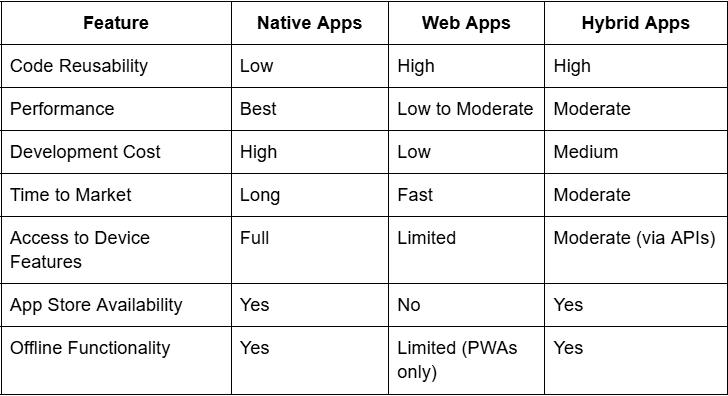
Which Type Should You Choose?
The best choice depends on your business needs, budget, timeline, and target audience. Here’s a quick breakdown:
- Choose native if you prioritize performance, speed, and user experience.
- Opt for web apps when you need quick deployment and cost efficiency.
- Go with a hybrid for a balanced approach—fast development with native capabilities.
Understanding the App Development Roadmap
Before you jump into mobile application development, consider the app development roadmap. This roadmap includes:
- Ideation and Goal Setting
- User Research and Market Analysis
- Choosing the Right Development Type
- UI/UX Designing
- Coding and Development
- Testing and Bug Fixing
- Launch and Marketing
- Post-launch Updates
Every phase is crucial. Skipping one can derail the entire process.
Popular Frameworks Used in Mobile Application Development
Native Development Frameworks
- Android Studio (Android)
- Xcode (iOS)
Web App Frameworks
- AngularJS
- Vue.js
- Bootstrap
Hybrid App Frameworks
- Flutter
- React Native
- Ionic
- Xamarin
These tools make the process efficient and allow developers to focus on features and user experience.
Trends Impacting Mobile App Development in 2025
Mobile app tech is evolving rapidly. Stay ahead by keeping up with these trends:
- AI Integration: Personalized user experiences and smarter chatbots
- IoT Integration: Apps that control smart devices
- 5G Optimization: Faster app performance and connectivity
- Voice User Interface (VUI): Hands-free commands and navigation
- Augmented Reality (AR): Enhanced retail and gaming experiences
Adopting these technologies can give your app a competitive edge.
Mistakes to Avoid During App Development
- Ignoring platform guidelines
- Skipping UI/UX research
- Not testing across devices
- Overloading with features
- Forgetting about updates and support
Avoid these mistakes to improve app longevity and user satisfaction.
Final Thoughts
The world of mobile application development is rich with options. Whether you go native, web-based, or hybrid, each type offers unique benefits. Align your choice with business goals and user expectations. Take time to plan your app development roadmap, and you’ll create an app that not only looks good but also performs flawlessly.