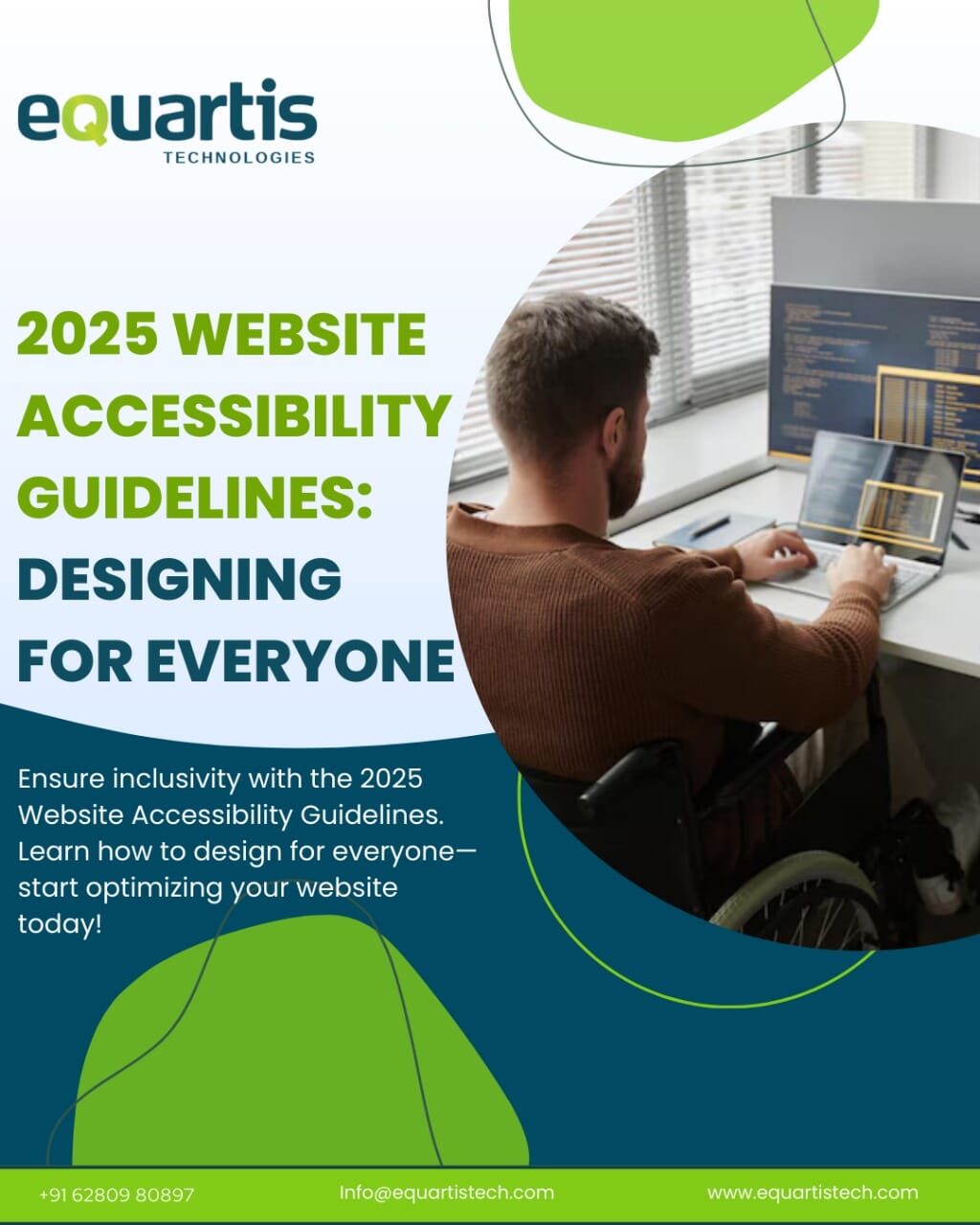
As we step into 2025, creating inclusive, accessible websites is more important than ever. Accessibility ensures that all users, regardless of ability or disability, can navigate, understand, and interact with digital content. The 2025 Website Accessibility Guidelines are designed to support developers, designers, and businesses in creating digital spaces that are usable by everyone.
Whether you’re building a personal blog, e-commerce store, or government portal, understanding these guidelines can help you ensure your site is accessible, compliant, and user-friendly. In this blog, we’ll explore the core principles of web accessibility, what’s new in 2025, practical implementation strategies, and how businesses can align with the latest standards.
What is Web Accessibility?
Web accessibility refers to the inclusive practice of removing barriers that prevent interaction with, or access to, websites by people with disabilities. This includes users with visual, auditory, motor, cognitive, and neurological impairments.
Accessible websites make use of proper design, structure, and coding to ensure that assistive technologies like screen readers, voice navigation tools, and alternative input devices can interact with the content effectively.
Why Accessibility Matters in 2025
As technology continues to evolve, so do user expectations and legal requirements. Accessibility is not just about compliance—it’s about providing equal access to information and services.
1. Growing Number of Users Rely on Accessibility
Globally, over 1 billion people live with some form of disability. With aging populations and increased digital engagement, more users rely on accessible design to use the internet.
2. Legal and Ethical Responsibility
Many countries have enacted laws that require web accessibility for public and private organizations. Failing to meet accessibility standards can result in legal action, fines, and reputational damage.
3. Improved User Experience for All
Accessible websites are often faster, better structured, and easier to navigate. These enhancements benefit every user, not just those with disabilities.
Overview of the 2025 Website Accessibility Guidelines
The 2025 Website Accessibility Guidelines build on previous standards, such as WCAG 2.2, and emphasize clarity, consistency, and user empowerment.
Key Updates in 2025:
- Expanded Focus on Cognitive Accessibility
- Emphasizes simplified language, consistent layouts, and guided navigation.
- Helps users with learning disabilities, ADHD, and memory-related challenges.
- Enhanced Mobile Accessibility
- Ensures that mobile apps and responsive websites offer equivalent functionality across devices.
- Addresses common issues like small touch targets, complex gestures, and poor contrast.
- Personalization Features
- Encourages sites to provide user settings for text size, color schemes, and navigation aids.
- Aims to give users more control over their browsing experience.
- Support for Emerging Technologies
- Guidelines now account for augmented reality (AR), virtual assistants, and voice-controlled interfaces.
- Ensures accessibility extends to AI-driven and immersive content.
- Stronger Compliance Metrics
- Introduces new success criteria and clearer pass/fail thresholds.
- Provides detailed guidance for implementation and testing.
The Four Principles of Accessibility (POUR)
The foundation of any accessibility guideline lies in the POUR principles:
1. Perceivable
- Content must be presented in ways that users can perceive.
- Includes providing text alternatives for images, captions for videos, and logical structure.
2. Operable
- Interface elements must be navigable and usable via keyboard and assistive devices.
- This includes ensuring that interactive elements are easily clickable and that navigation is consistent.
3. Understandable
- Content and UI must be easy to read, predict, and operate.
- Includes readable fonts, simple language, and intuitive layouts.
4. Robust
- Content must be interpretable by a wide range of user agents, including assistive technologies.
- Ensures future-proofing as new devices and software emerge.
Practical Steps to Achieve Accessibility in 2025
Making your website accessible might seem overwhelming at first, but breaking it down into actionable steps makes it manageable:
1. Conduct an Accessibility Audit
Start by evaluating your current website. Use tools like:
- WAVE (Web Accessibility Evaluation Tool)
- AXE Accessibility Checker
- Google Lighthouse
Identify issues related to contrast, missing alt text, incorrect heading structure, and keyboard navigation.
2. Structure Content Logically
Use semantic HTML to define content hierarchy (e.g., <h1>, <h2>, <p>). Proper structure helps screen readers and improves navigation.
3. Ensure Keyboard Accessibility
All interactive elements (buttons, menus, forms) must be usable with a keyboard alone. This benefits users who cannot use a mouse.
4. Use Descriptive Alt Text
All images should have descriptive alternative text unless they are purely decorative. Alt text communicates content to screen readers.
5. Maintain Sufficient Color Contrast
Use tools like Contrast Checker to ensure text stands out against backgrounds. Avoid relying solely on color to convey information.
6. Add Captions and Transcripts
All multimedia content should include captions and transcripts. This helps users with hearing impairments and improves content SEO.
7. Enable Resizable Text
Ensure users can increase text size without breaking the layout. This benefits those with visual impairments or reading difficulties.
8. Provide Error Suggestions
When users make input errors (e.g., in forms), offer clear error messages and suggestions to correct them.
9. Test with Real Users
Involve people with disabilities in your testing process. Their feedback will reveal issues that automated tools might miss.
Tools and Technologies That Support Accessibility
Here are some widely used tools that assist in building and maintaining accessible websites:
Development Tools:
- ARIA (Accessible Rich Internet Applications): Enhances HTML elements for better interaction with assistive tech.
- Semantic HTML5: Provides meaningful structure.
Testing Tools:
- Accessibility Insights: Detects compliance issues and suggests fixes.
- NVDA/JAWS: Screen readers to test content presentation.
CMS Plugins:
- WordPress Accessibility Helper
- Drupal Accessibility Modules
Benefits of Embracing Accessibility
1. Wider Audience Reach
Accessible websites cater to a broader audience, including users with disabilities, older users, and those in temporary situations (e.g., broken arm).
2. Improved SEO
Many accessibility practices, such as descriptive links and proper headers, align with SEO best practices.
3. Better User Experience
Clarity, readability, and ease of navigation benefit all users, not just those with disabilities.
4. Enhanced Brand Reputation
Being inclusive shows that your brand values all individuals, building trust and loyalty.
Future-Proofing Your Website
Accessibility is not a one-time task—it’s an ongoing commitment. As new technologies and user behaviors emerge, the 2025 Website Accessibility Guidelines encourage continuous learning and adaptation.
Emerging Trends:
- Voice Navigation: Increasing use of voice commands will require more intuitive labeling and focus management.
- AI Personalization: Adapting experiences based on user preferences will make websites more flexible and inclusive.
- Inclusive AR/VR: Ensuring virtual experiences are navigable by users with varying abilities.
Stay updated with evolving standards and regularly audit your website to remain compliant and competitive.
Legal Frameworks and Compliance
Understanding the legal landscape is critical for organizations:
- ADA (Americans with Disabilities Act): Requires accessibility in public digital spaces.
- Section 508 (US): Federal websites must be accessible.
- EN 301 549 (EU): Accessibility requirements for public sector websites.
Meeting the web content accessibility guidelines and aligning with regional laws is essential to avoid penalties.
Final Thoughts
Accessibility is more than ticking boxes—it’s about empathy, inclusivity, and commitment to universal usability. The 2025 Website Accessibility Guidelines provide a comprehensive framework to create digital environments that welcome everyone.
Whether you’re launching a new project or updating an existing site, accessibility should be a priority from the start. It enhances not only usability and compliance but also the overall digital experience.
If you’re looking for expert support in building an accessible and user-friendly site, partnering with a professional Website Design Company in Chandigarh can ensure your platform meets the latest standards and serves every user effectively.