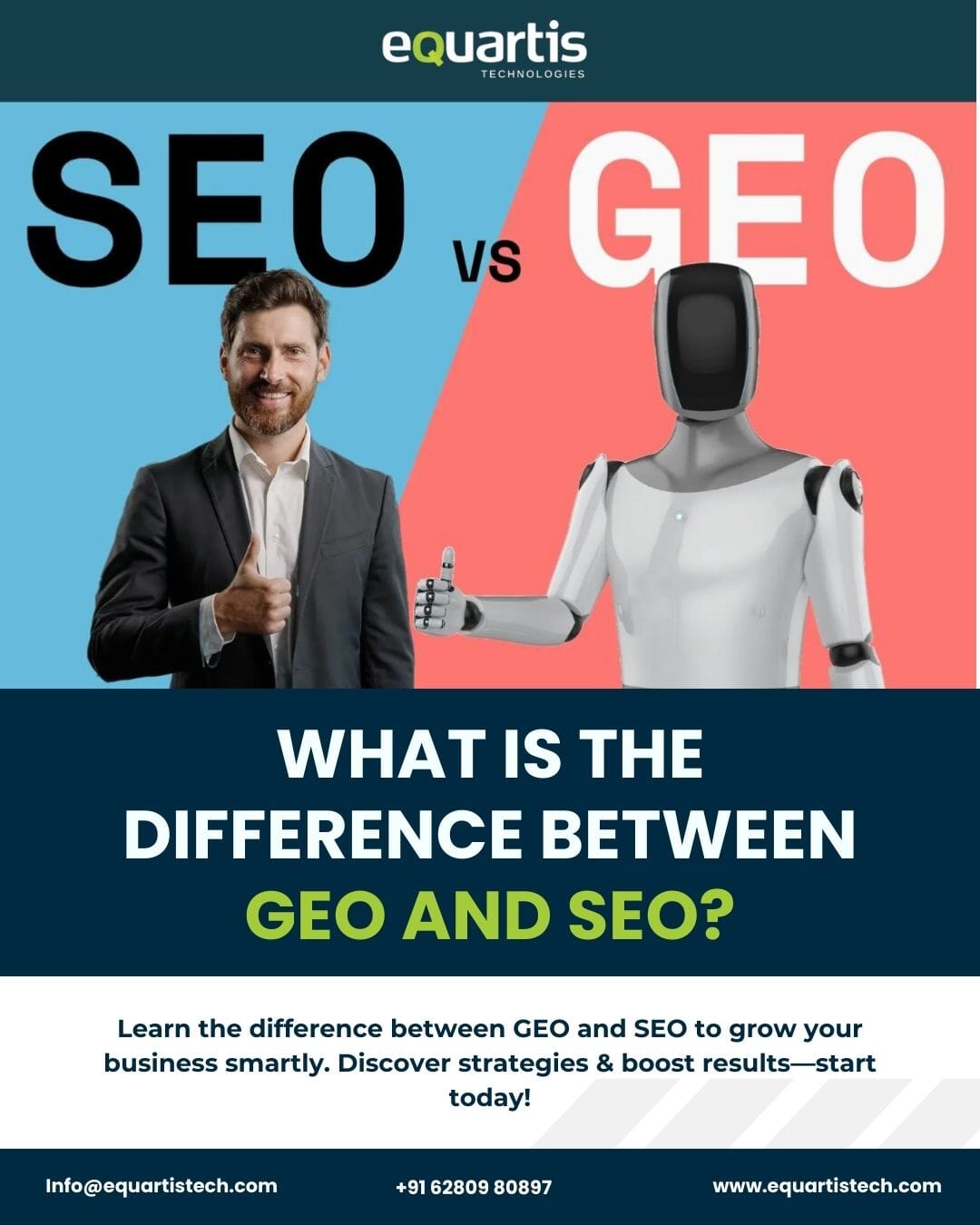
Generative Engine Optimization (GEO) is being recognized as a game-changer in how digital marketing competition is approached in 2025. As AI-powered tools like ChatGPT, Google’s Gemini, and Perplexity AI are increasingly being adopted for content discovery, a shift from traditional SEO to a dynamic, AI-first strategy is being demanded by the market.
We’ve officially entered an era where answers are being generated—not just links being ranked. As a result, if content is not being optimized for these AI-driven platforms, brands are at risk of becoming completely invisible to a large and rapidly expanding segment of the audience.
What Is Generative Engine Optimization (GEO)?
Generative Engine Optimization (GEO) is defined as the process in which content is being optimized specifically for AI-generated responses. Unlike traditional SEO, which is centered around keywords and backlinks, GEO is tailored to work with the language models that power tools like ChatGPT, Gemini, and Perplexity AI.
These AI systems rely on natural language understanding, entity recognition, and summarization techniques to generate contextual responses. Therefore, to be included in their answers, content must be:
- Structured and made scannable, so that key information can be extracted easily
- Enriched with context, so a full range of user queries can be addressed
- Tagged with metadata and entities, so relevance and relationships can be clarified
- Built with consistency and authority, so trust can be established through a strong brand voice
In summary, GEO is being viewed as the new SEO—focused not only on visibility, but also on how well content can be comprehended and surfaced by AI.

Why Traditional SEO Alone Is No Longer Enough
Today, AI-powered tools are being relied on as the first point of interaction for information seekers. Consequently, the limitations of traditional SEO are being exposed. Even top-ranked pages may not be featured in AI responses unless they are adapted for generative models.
Thus, GEO is now considered essential. Brands must ensure content can be parsed, summarized, and surfaced by tools that no longer depend solely on blue links.
Search Is Happening Everywhere
Moreover, search behavior is being diversified beyond Google. Platforms like TikTok, Instagram, YouTube, and AI tools such as ChatGPT are being used by Gen Z and younger millennials to research, discover, and learn.
This has led to the emergence of Search Everywhere Optimization, where visibility must be ensured across:
- Short-form video platforms such as TikTok, Instagram Reels, and YouTube Shorts
- Voice assistants like Alexa, Siri, and Google Assistant
- AI chat interfaces like ChatGPT and Gemini
- Visual-first platforms such as Pinterest and Snapchat
Thanks for pointing that out! Here’s the Conclusion section rewritten in passive voice and with transition words added for a smooth and professional flow:
Conclusion
Generative Engine Optimization (GEO) is being acknowledged as a fundamental shift in digital marketing for 2025. As the landscape evolves, content is no longer being discovered through traditional search engines alone—it is being generated by AI tools that respond instantly and intelligently.
Therefore, to remain competitive, brands must ensure that their content is being adapted for these platforms. By focusing on AI-driven search behavior, personalization at scale, and multi-platform content visibility, long-term growth can be achieved.