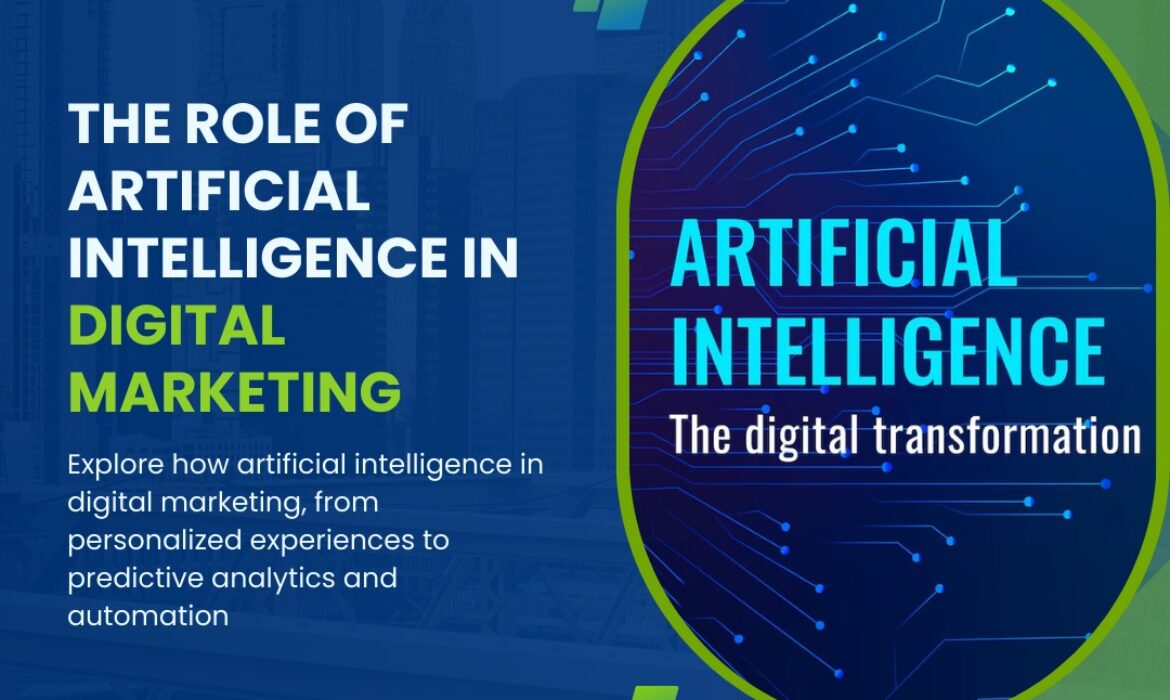
In today’s digital age, artificial intelligence (AI) is transforming the marketing landscape by providing unprecedented opportunities for personalization, efficiency, and data-driven decision-making. From chatbots to predictive analytics, AI is reshaping how businesses connect with their customers and optimize their marketing strategies. In this blog, we’ll explore the pivotal role of AI in digital marketing and its impact on businesses and consumers.
Personalization at Scale
One of the most significant contributions of AI to marketing is its ability to deliver personalized experiences at scale. Through machine learning algorithms and data analysis, AI can segment audiences, predict customer preferences, and tailor content to individual users. Key applications include:
- Personalized Recommendations: AI-driven recommendation engines analyze user behavior to suggest products or content that align with individual preferences.
- Dynamic Content: AI enables dynamic content creation, allowing marketers to deliver personalized messages and offers in real-time.
- Email Marketing: AI-powered email marketing platforms use data to segment audiences and send personalized emails with optimized subject lines and content.
By offering personalized experiences, businesses can enhance customer engagement, increase conversion rates, and foster brand loyalty.
Predictive Analytics and Insights
AI’s ability to process vast amounts of data enables marketers to gain valuable insights and make informed decisions. Predictive analytics leverages historical data and machine learning models to forecast future trends and behaviors. Key benefits include:
- Customer Segmentation: AI identifies patterns in customer behavior, enabling marketers to segment audiences more effectively.
- Churn Prediction: AI models predict which customers are likely to churn, allowing businesses to take proactive measures to retain them.
- Demand Forecasting: AI analyzes market trends and customer data to predict demand for products or services, optimizing inventory and supply chain management.
By harnessing predictive analytics, businesses can anticipate customer needs, allocate resources efficiently, and maximize marketing ROI.
Automation and Efficiency
AI-driven automation is streamlining marketing processes and increasing operational efficiency. From chatbots to automated advertising, AI reduces the need for manual intervention and accelerates marketing workflows. Key applications include:
- Chatbots: AI-powered chatbots provide instant customer support, answer queries, and guide users through the sales funnel 24/7.
- Programmatic Advertising: AI automates ad buying, optimizing ad placements and targeting to reach the right audience at the right time.
- Social Media Management: AI tools schedule posts, analyze engagement, and generate content suggestions for social media platforms.
By automating repetitive tasks, marketers can focus on strategic initiatives and creative campaigns, driving better results with fewer resources.
Enhanced Customer Experiences
AI enhances customer experiences by enabling seamless interactions and providing valuable insights. Key AI applications in customer experience include:
- Voice Assistants: AI-powered voice assistants like Amazon’s Alexa and Google Assistant enable hands-free interactions and voice searches.
- Sentiment Analysis: AI analyzes customer feedback and social media mentions to gauge sentiment and improve brand perception.
- Augmented Reality (AR): AI-driven AR experiences allow customers to visualize products in real-world settings before making a purchase.
By leveraging AI to enhance customer experiences, businesses can build stronger relationships, boost customer satisfaction, and differentiate themselves from competitors.
Conclusion
Artificial intelligence is revolutionizing Digital marketing by offering new ways to engage with customers, optimize strategies, and drive business growth. By embracing AI technologies, businesses can deliver personalized experiences, gain actionable insights, automate processes, and enhance customer interactions. As AI continues to evolve, its role in marketing will only become more critical, empowering businesses to thrive in an increasingly competitive landscape.